Nocturnal

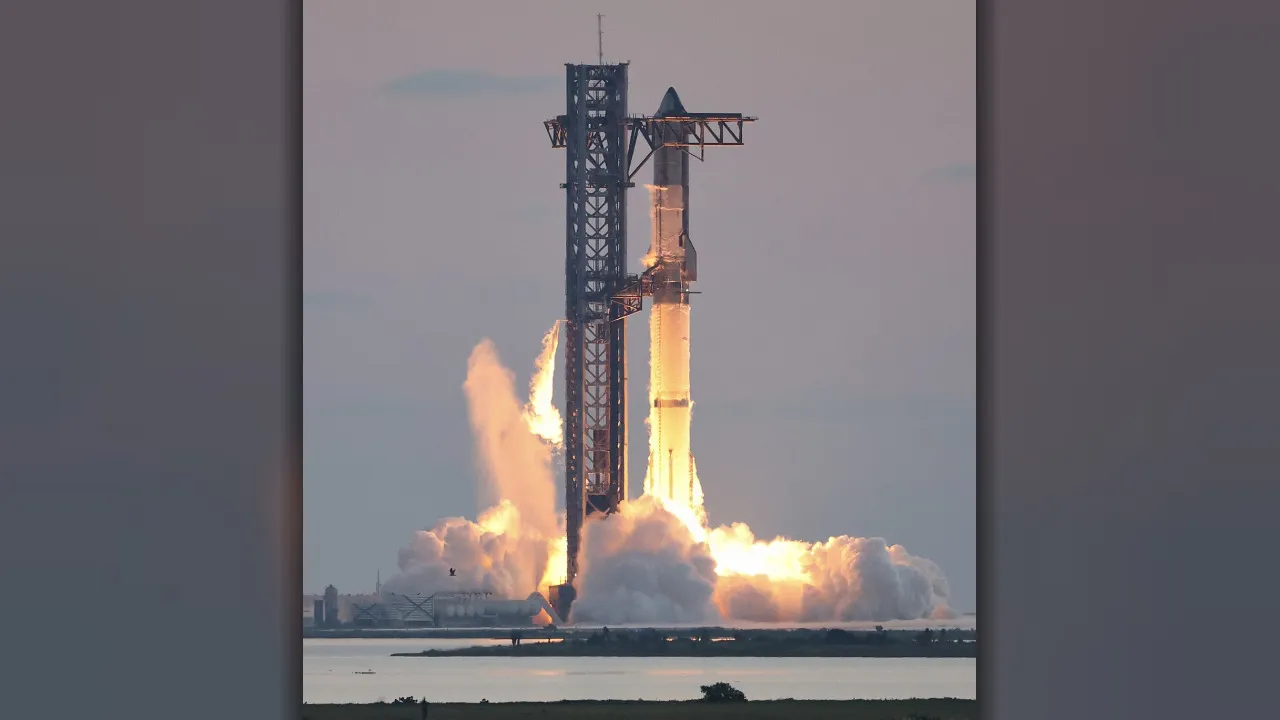
SpaceX’s Starship has reached orbit for the first time ever, on its 14th test flight, before ending in a dramatic fireball in the Pacific Ocean.
The 407-foot rocket, described as the most powerful ever built, launched from Starbase in southern Texas on Monday morning. It was aiming to complete six full orbits of Earth over a 10-hour mission, deploying satellites along the way before splashing down near Chile.
It reached orbit, roughly 269 kilometres above Earth, and released 26 next-generation Starlink V3 satellites one by one. Musk confirmed on X that “all 26 Starlink V3 operational satellites deployed and operating nominally.”
But the flight didn’t go entirely to plan. One of the ship’s engines shut down shortly after the rocket’s two sections separated, before it reached orbit, according to The Motley Fool. Flight controllers decided to bring Starship back to Earth roughly seven hours earlier than planned, cutting the mission down to about three hours instead of ten.
Splashdown, then a fireball
The upper-stage Starship made a controlled splashdown in the Pacific Ocean near Chile, while the Super Heavy booster came down separately in the Gulf of Mexico, as reported by The Motley Fool.
SpaceX shared footage of the final descent and splashdown but cut the video just before Starship burst into flames in the water, according to The Sun. The company still hailed the mission as a success, posting: “Splashdown confirmed. Congratulations to the SpaceX team on the first orbital flight of Starship!”
The ups and downs of 13 earlier flights
Monday’s flight was the 14th attempt in SpaceX’s Starship programme, and by far the furthest the rocket has ever travelled. Previous test flights, tracked in a BBC report by Ricky Boleto, never made it beyond the Indian Ocean, and several ended in explosions and fireballs before reaching anything close to a full orbit.
That chequered history is exactly why Monday’s flight mattered so much. As The New York Times put it before launch, a successful orbital flight would mark “a crucial milestone” towards Musk’s ambitions of eventually sending people to the Moon and Mars.
What happens next
Starship is central to SpaceX’s long-term plans. Musk originally developed the rocket with Mars colonisation in mind, but the company’s nearer-term focus is on the Moon and using Starship to launch huge batches of Starlink satellites, eventually phasing out its existing Falcon 9 rocket.
SpaceX is also working towards making Starship fully reusable, with plans to eventually catch both the booster and the ship using giant mechanical arms back at the launch pad rather than losing them in the ocean. Musk has previously warned that if the rocket ever broke apart over land, “our popularity would diminish very rapidly,” underlining the safety stakes involved in testing over open water.
A second Starship launch site is nearing completion at Kennedy Space Center in Florida, with a third planned for Louisiana. SpaceX has not yet confirmed the date of the 15th test flight, but engineers will be poring over the data from the engine failure before Starship flies again.