Nocturnal
“Polar vortex” is trending in UK search terms this week, after forecasters confirmed the swirling mass of cold air above the Arctic is stronger than normal for this time of year. It sounds like bad news for winter, but as JOE.co.uk reports, the reality is far less straightforward.
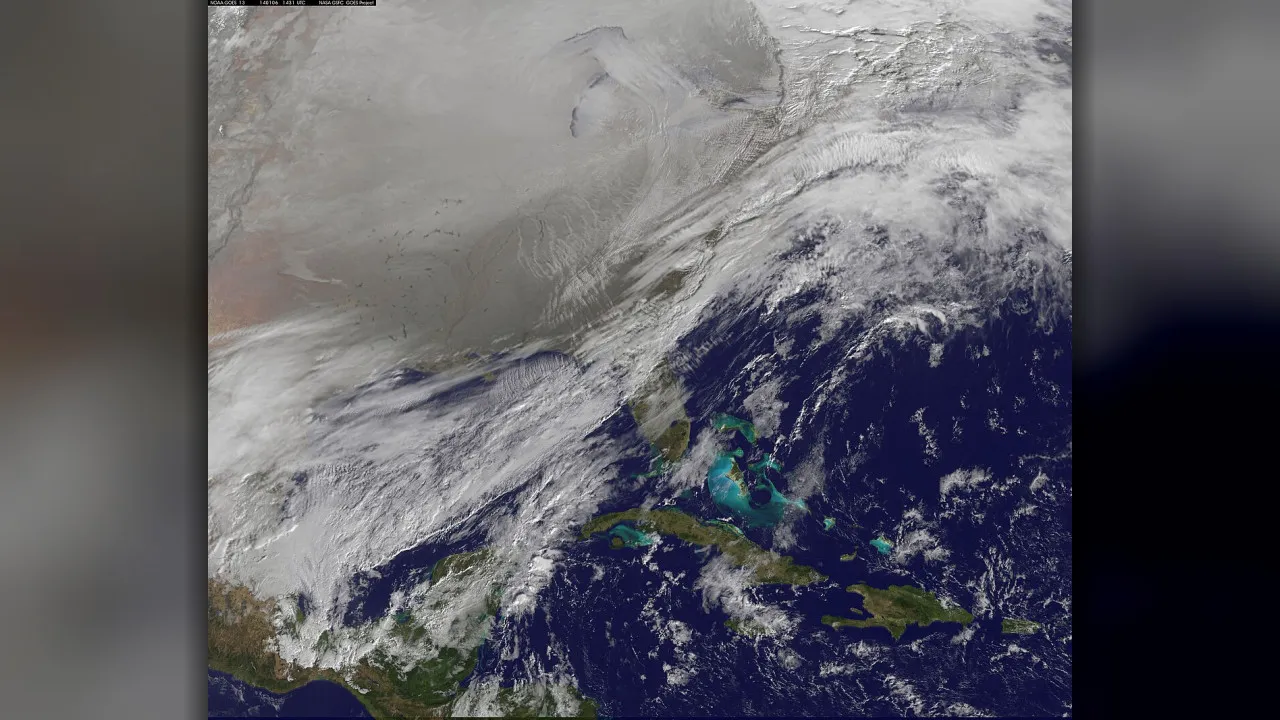
The polar vortex is a huge circulation of freezing air and powerful winds that forms in the stratosphere over the Arctic every cold season, according to the National Oceanic and Atmospheric Administration. When it’s strong and stable, it tends to keep the coldest air locked up near the pole. When it weakens, stretches or splits, that Arctic air can spill much further south.
What could it mean for the UK?
Right now, the vortex is forecast to strengthen through late September before settling closer to typical levels in October, according to the European Centre for Medium-Range Weather Forecasts data reported by Yahoo. That’s not automatically bad news, since a strong vortex generally helps contain cold air rather than release it.
The bigger question, as Yahoo News UK notes, is what happens later. Long-range forecasts suggest the vortex could weaken unusually early, possibly as soon as the end of November, in what’s known as a sudden stratospheric warming. Records dating back to the late 1950s show this has only happened twice before this early in the season, according to Yahoo News UK, so this winter is being watched closely.
Adding to the uncertainty is a powerful El Niño developing in the Pacific. HuffPost UK reports the pattern is being described as “unprecedented,” and forecasters are divided on whether it will help trigger a more volatile polar vortex that sends freezing air towards Britain, or whether the UK will be spared the worst of it. As things stand, nothing is confirmed either way.
Why the government wants households ready regardless
Uncertain forecasts aside, UK emergency planners say now is a sensible time to think about how you’d cope if the weather, or any other crisis, disrupted daily life. According to the BBC, officials are increasingly focused on threats ranging from heatwaves and flooding to cyberattacks on energy infrastructure, after this summer’s wildfires in places such as Swallowfield in Berkshire and Abingdon in Oxfordshire, which also forced the closure of the A31 in the New Forest.
The government’s advice includes keeping a basic emergency kit at home: hand sanitiser and wet wipes for hygiene if the water supply is cut, bottled water, and non-perishable food such as tinned meat, fruit and vegetables, plus a tin opener.
Professor Hannah Cloke, a climate scientist at the University of Reading, told the BBC that having two to three days’ worth of supplies ready makes sense. “It is a little bit scary for some people I think, but what we really need to think about is how we can prepare better because, in preparing better, it actually becomes less scary,” she said.
The BBC also highlighted the case of Ricardo Evangelista, from Broughton in Hampshire, who was in Lisbon on business when Portugal and Spain’s electricity networks collapsed on 28 April 2026, the biggest blackout to hit Europe in 20 years. He described mobile signals, cash machines, supermarkets and public transport all grinding to a halt within hours, with power not fully restored for nearly a day.
Where things stand now
For now, no forecaster is predicting a definite big freeze for the UK this winter. What’s clear is that the polar vortex is behaving in a slightly unusual way, and combined with a strong El Niño, meteorologists say the coming months are harder than usual to call. Whatever the weather brings, officials say the basics of emergency preparation, water, food and a plan for staying in touch with loved ones, remain worth having in place.